
Fast, Reliable On-Site X-Ray Services
At Life Mobile Imaging, we bring hospital-quality digital X-ray services directly to your home or facility—no patient transport, no long waits, just fast and accurate results.
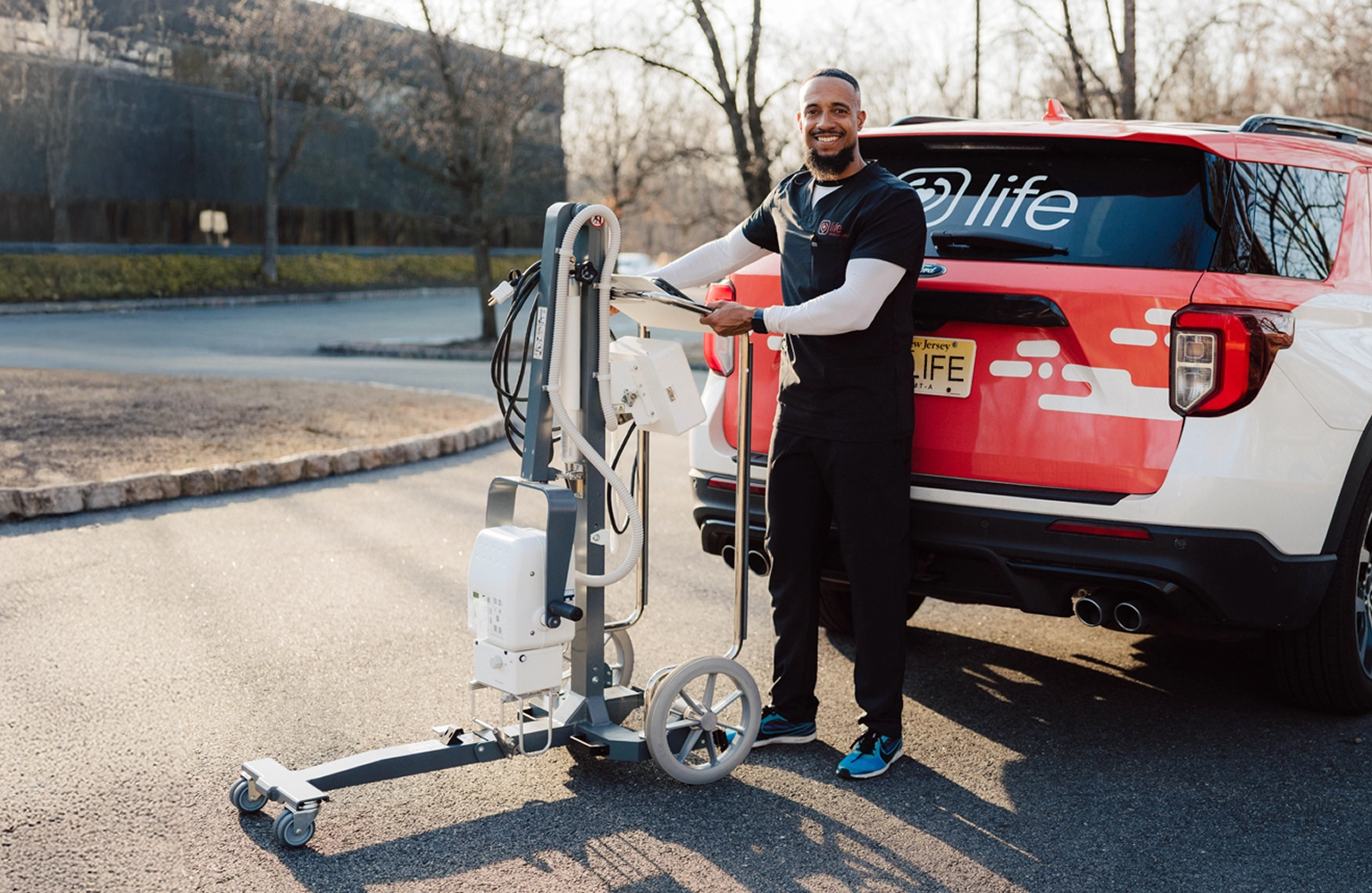
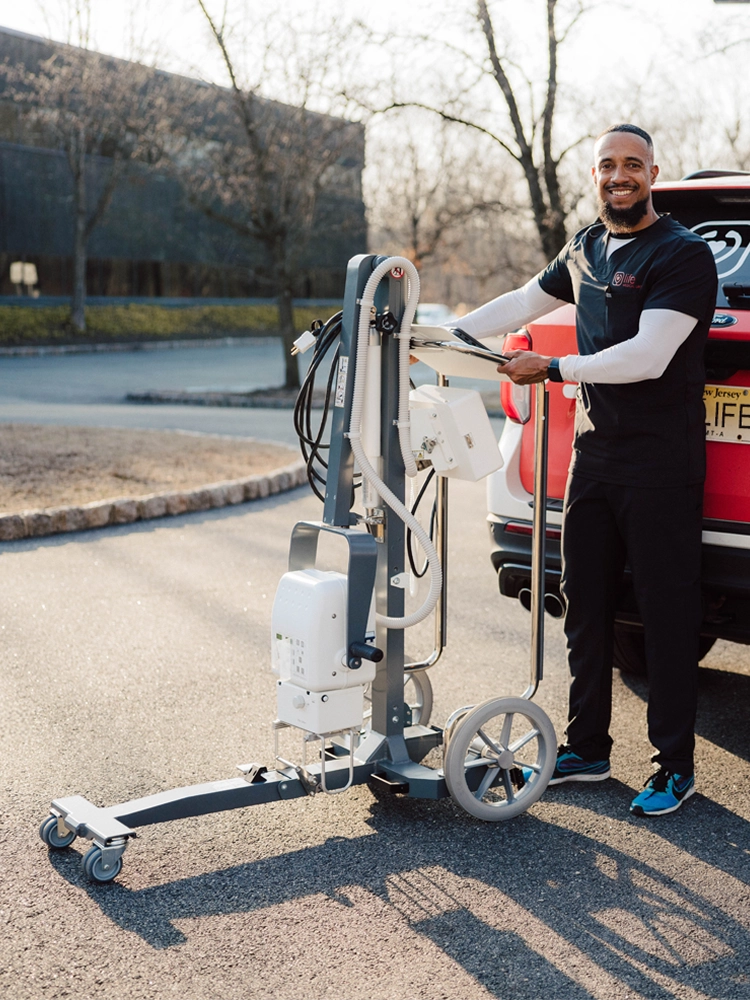
At Life Mobile Imaging, we bring hospital-quality digital X-ray services directly to your home or facility—no patient transport, no long waits, just fast and accurate results.
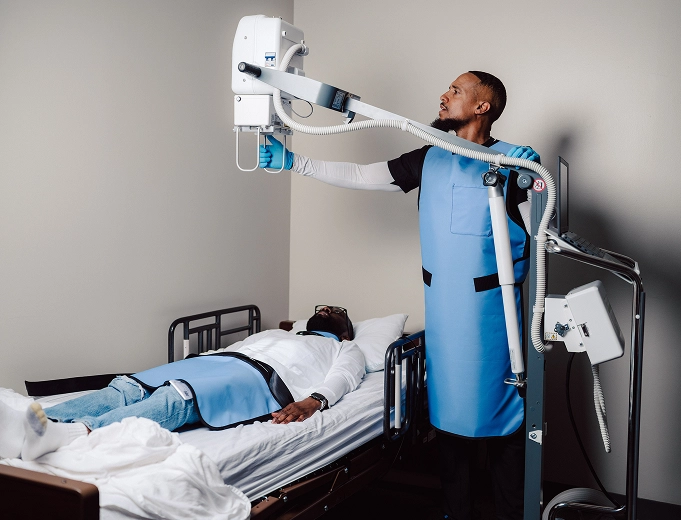
Why Choose Life Mobile Imaging?
- On-Site Digital X-Rays Performed at your location, eliminating the need to transport patients.
- Rapid Interpretation Get results within minutes to act fast.
- 1-Hour Official Read All images reviewed by board-certified radiologists.
- Seamless Provider Access Results are instantly shared with your care team.
- Perfect For Skilled nursing facilities, assisted living, rehab centers, and urgent care providers.
How does it work?

Our Services

Ultrasound

Vascular Studies

Echocardiogram

X-Ray
Access Your Portal
Easily access our secure platforms for real-time results and patient care coordination.
& Rehab Centers
Medical Providers
Frequently Asked Questions

At-home diagnostic imaging brings hospital-quality equipment, X-ray, ultrasound, echocardiogram, and vascular studies directly to skilled nursing facilities, assisted living communities, and rehab centers, eliminating the need to transport fragile or immobile patients.
Pricing varies based on study type, frequency of visits, and facility volume. At-home diagnostic imaging is billed through Medicare Part B or the patient's insurance the same way traditional radiology is billed meaning facilities generally face no direct out-of-pocket cost for the service itself.
Yes. Medicare Part B covers diagnostic imaging services including X-ray, ultrasound, echocardiogram, and vascular studies when medically necessary and ordered by a physician, regardless of whether they are performed in a facility or via at-home imaging. Our team handles billing coordination directly so facilities and ordering physicians aren't managing that complexity themselves.
Like portable X-ray at home, portable ultrasound is billed through Medicare Part B or private insurance when ordered by a physician making it effectively cost-neutral for most facilities and patients with coverage.
For most liver evaluations, MRI is generally preferred over CT because it provides superior soft tissue contrast without radiation exposure. CT remains valuable for rapid assessment in acute situations or when MRI is contraindicated. For facilities managing patients with liver concerns, Life Medical's on-site ultrasound service provides a strong first-line assessment tool for gallbladder, liver, and abdominal evaluation before escalating to MRI or CT.
A radiologist can identify imaging features that suggest whether a tumor may be benign or malignant but imaging alone usually cannot confirm whether a tumor is cancerous. A definitive diagnosis requires additional testing, such as a biopsy or laboratory analysis.
MRI is highly effective for detecting and evaluating many types of cancer, particularly those involving soft tissues, the brain, spine, liver and certain pelvic organs. However, no imaging test can detect every cancer. Some very small tumors, early-stage cancers or cancers without distinct imaging characteristics may not be visible on MRI alone.
Yes, at-home MRI services are available in some regions and are provided through specially equipped vehicles that travel between hospitals and healthcare facilities. Unlike portable X-ray or ultrasound equipment, MRI systems are much larger and require specialized shielding and infrastructure, making them unsuitable for bedside use in nursing facilities or private residences.
The best imaging test depends on the suspected cause of neck pain. X-rays are commonly used to evaluate fractures, arthritis, spinal alignment and other bone-related conditions. MRI is recommended when a physician suspects problems involving the spinal cord, discs, nerves or soft tissues.


ID: 31D2322466
Coverage Area
- Essex
- Morris
- Somerset
- Union
Contact
120 Eagle Rock Ave, Suite 200, East Hanover, NJ 07936
(973) 607-4911
hello@medical.lifeRandolph medical clinic 477 NJ-10, Suite 204 Randolph, NJ 07869
Life Ride, Life Home Care, Life DME, Life Home Therapy, Life Hospice, Life Health Group logos are all Registered in U.S. Patent and Trademark Office
Life Medical is a division of Life Health Group. Care provided by Life Medical Group PC and affiliated practices.
Privacy Policy